
Skip to content
Plan my trip

Cuyabeno

A corner of the Ecuadorian Amazon, in the country’s northeast, where the rivers run dark as a mirror, the forest floods every year and wildlife lives along the water’s edge. This is where Canangueno Lodge stands.

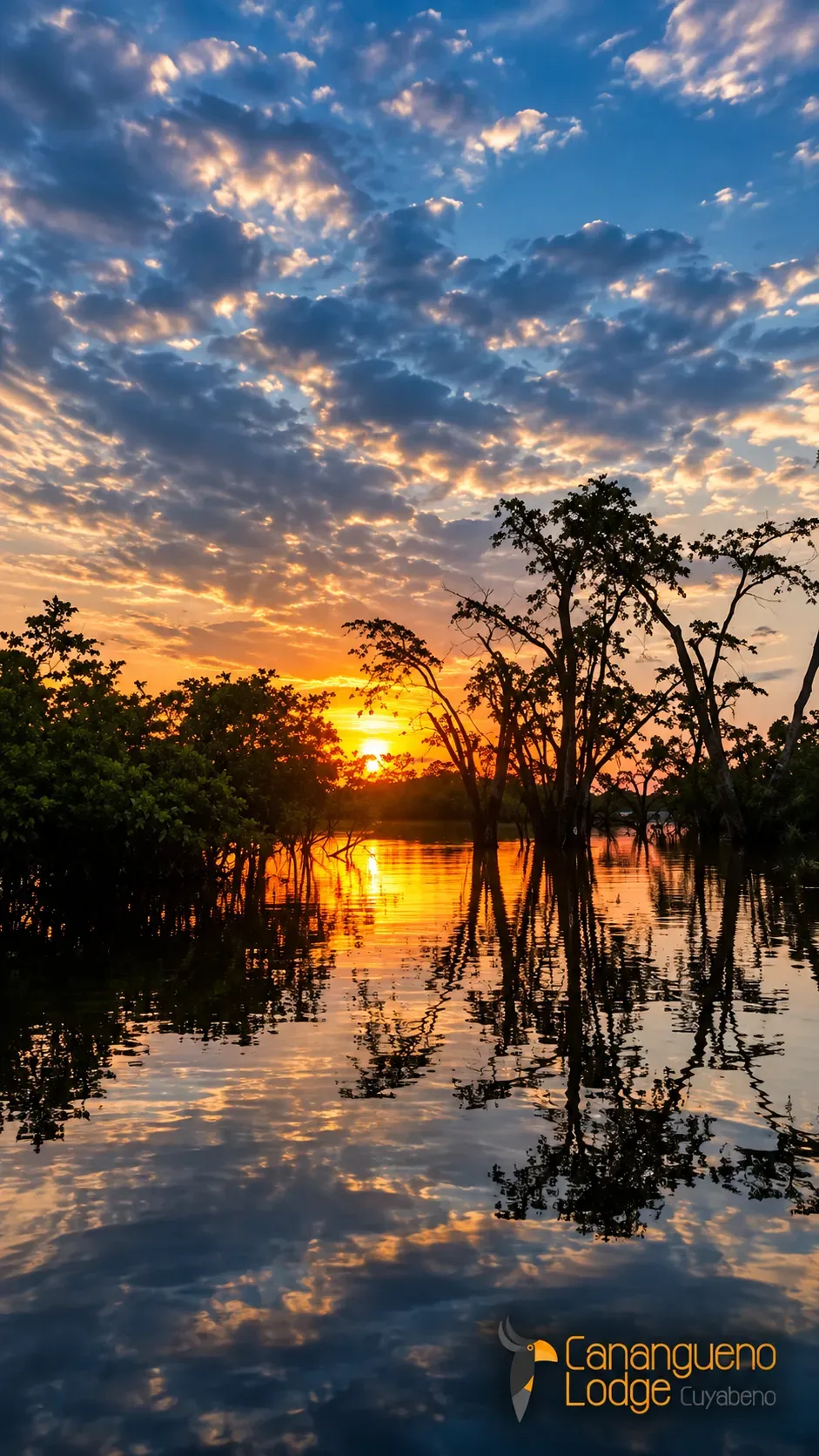
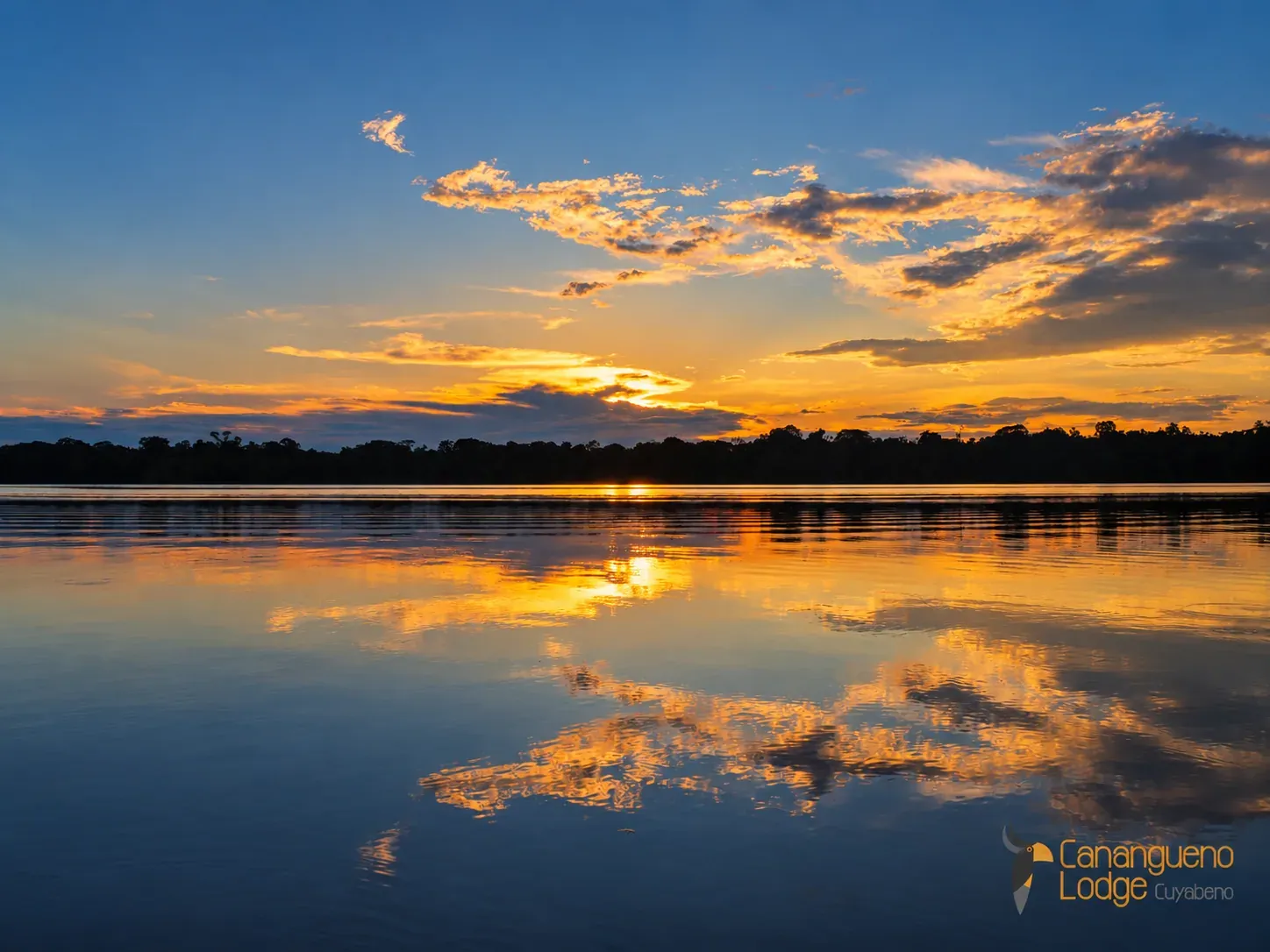
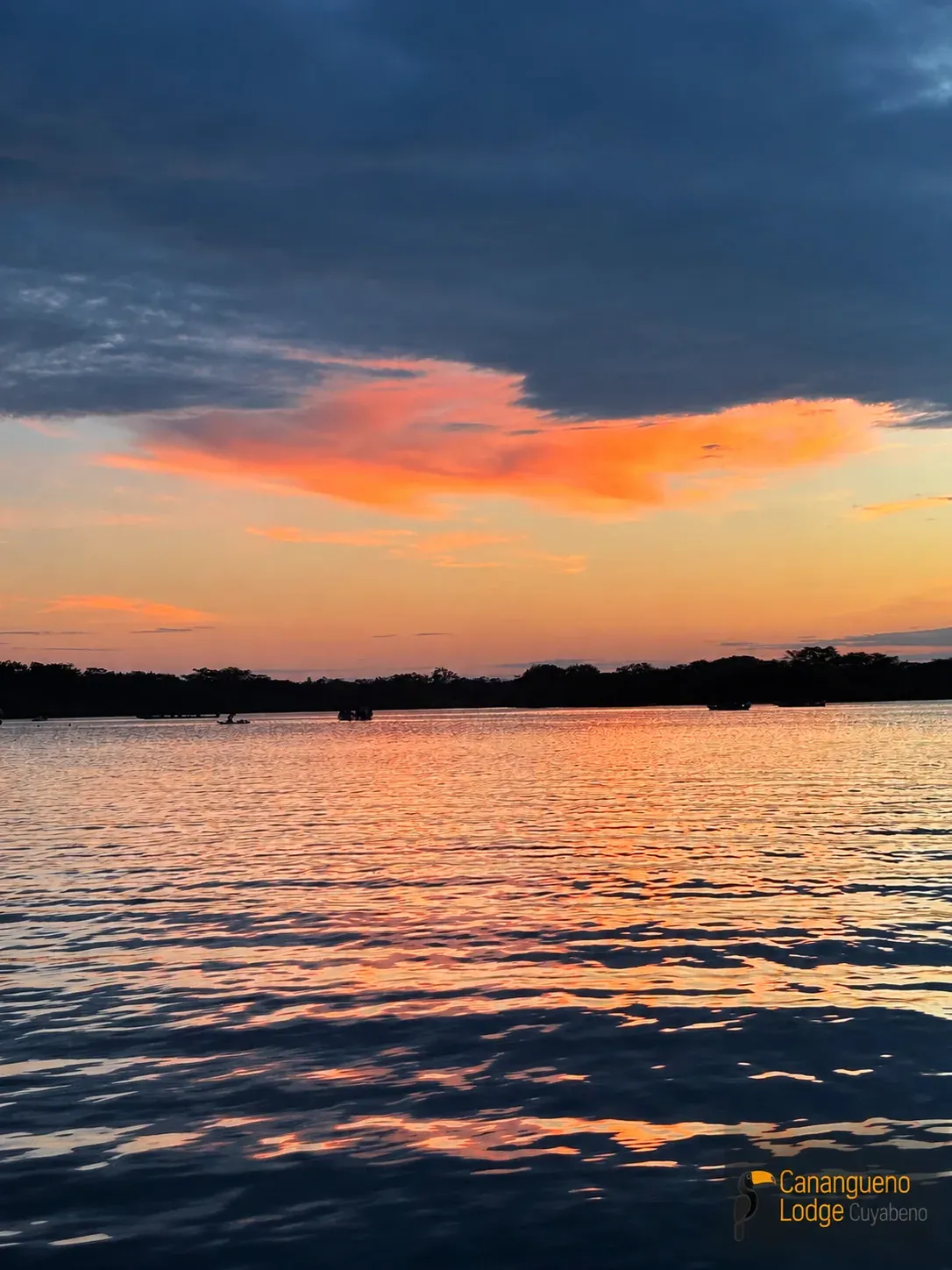
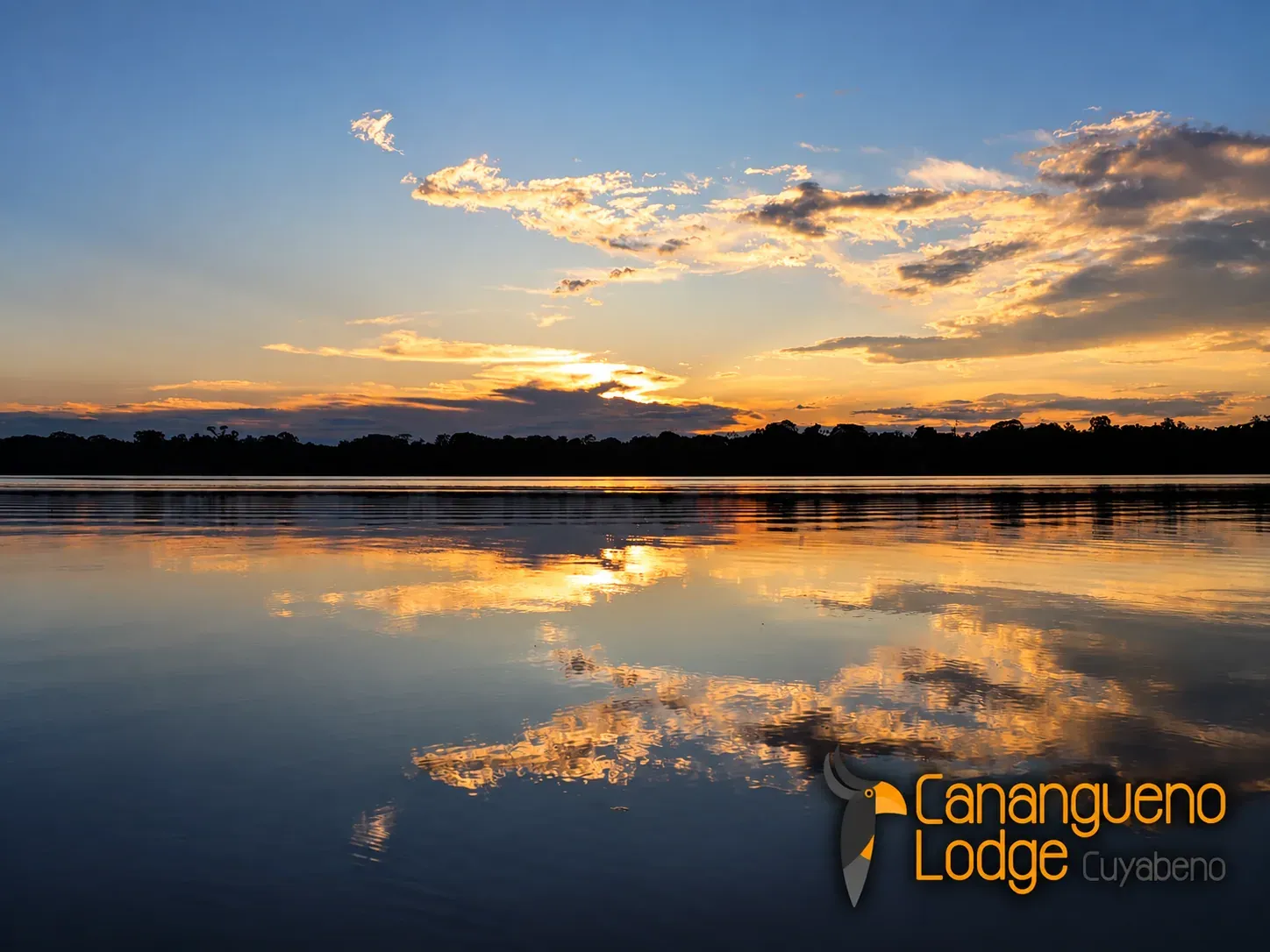
Sunset over the Cuyabeno river
1979
year the reserve was created
590,112 ha
of protected rainforest
14
lagoons linked by rivers
Thousands
of plant and animal species

A blackwater river

The Cuyabeno river isn’t brown like most Amazon rivers: it’s dark, almost black. It’s stained by tannins from leaves that fall and break down in the water. From a distance it looks like tea; up close it’s a perfect mirror that reflects the forest and the sky in full. You travel it by canoe, quietly, and the water is the best place from which to see the life of the forest.
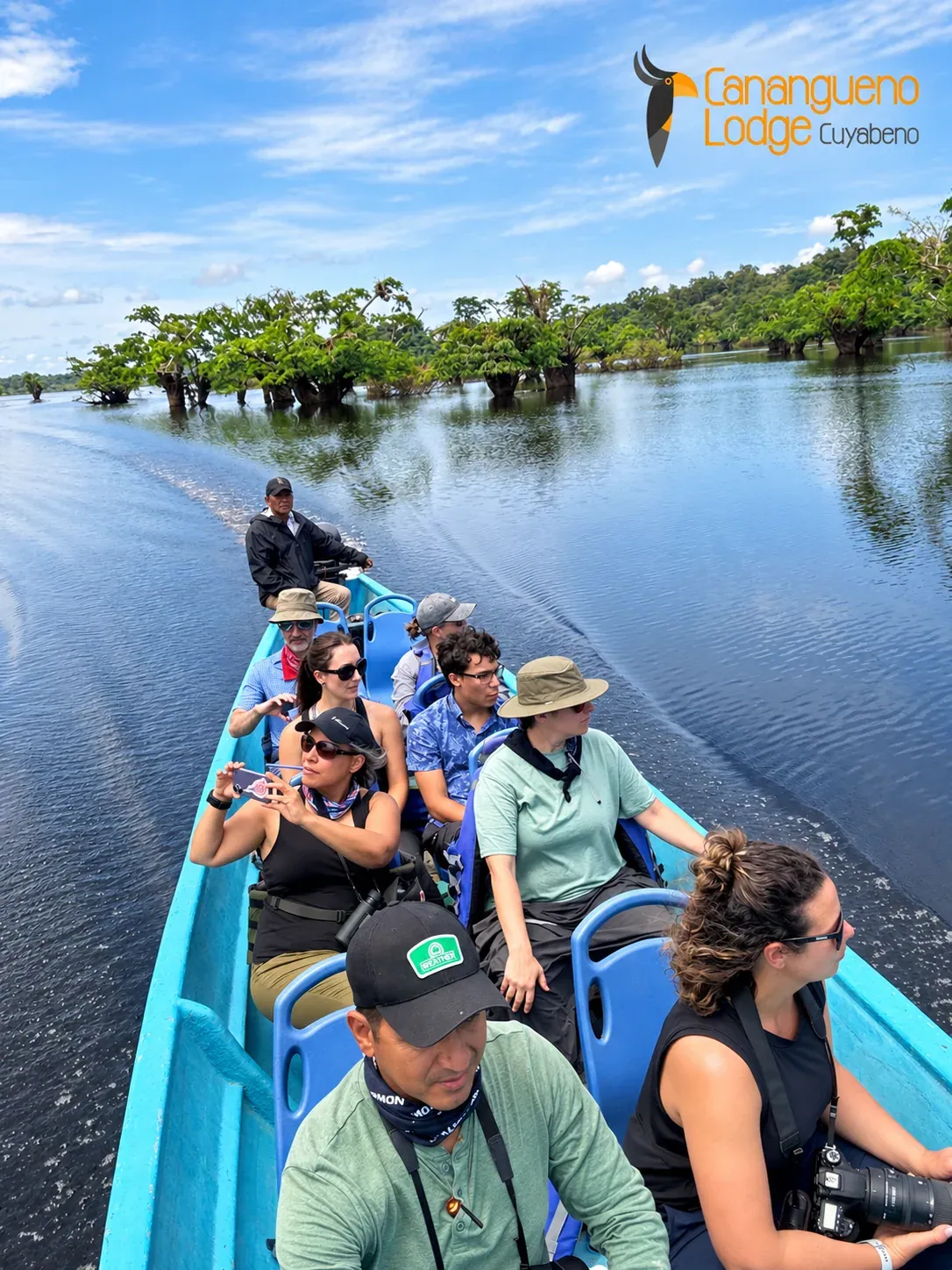
Paddling a canoe on the Cuyabeno river

Laguna Grande

The river links a system of lagoons, and the largest is the heart of the reserve. Macrolobium trees rise from the middle of the water, their trunks submerged for part of the year. This is where you swim in the late afternoon, look for anacondas among the roots and watch one of the most famous sunsets in Ecuador. At night, by torchlight, the eyes of caimans appear along the bank.

Laguna Grande at sunset

Primary forest

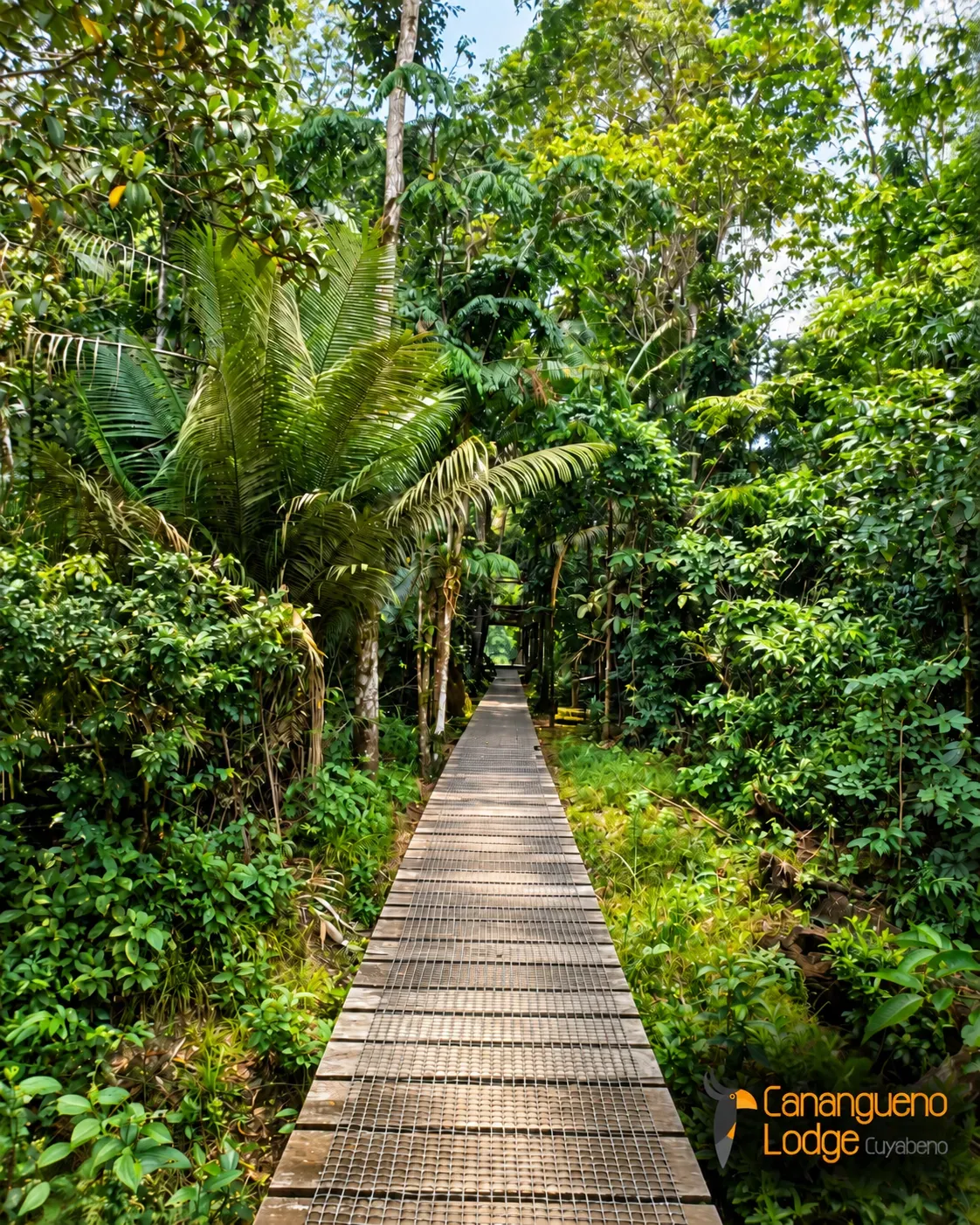
Away from the river, the forest has never been logged. The trails pass beneath ceibas — the largest tree in the Amazon — among morete palms, heliconias and orchids. On the ground and on the leaves live frogs, ants, spiders and insects you’ll only notice if someone shows you where to look, which is what the guides are there for.

Wooden boardwalk through the primary forest

The people of the river

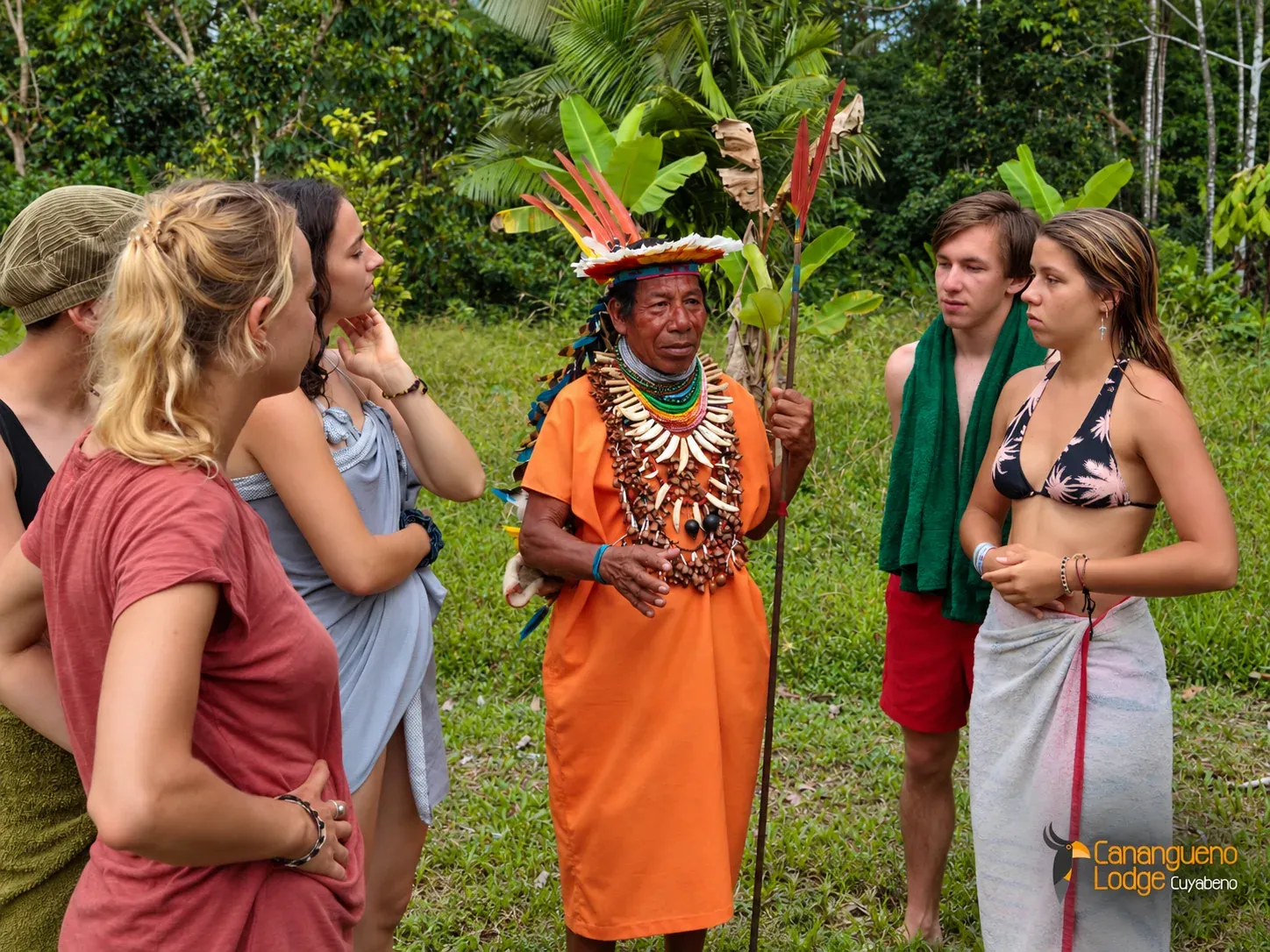
Cuyabeno isn’t an empty forest. Indigenous communities live inside the reserve — among them Siona, Secoya, Cofán and Kichwa — and have known this forest for generations. The tours visit the Siona Taraveya community of Tarapuy and the Seoqueya community: their history, their crafts and casabe, the cassava bread made by hand.

Visitors with a member of the Siona community

The animals you’ll see

Nothing is guaranteed: it’s a rainforest, not a zoo. But these are the animals our guides find on the tours, and nearly all of them can be seen from the canoe.

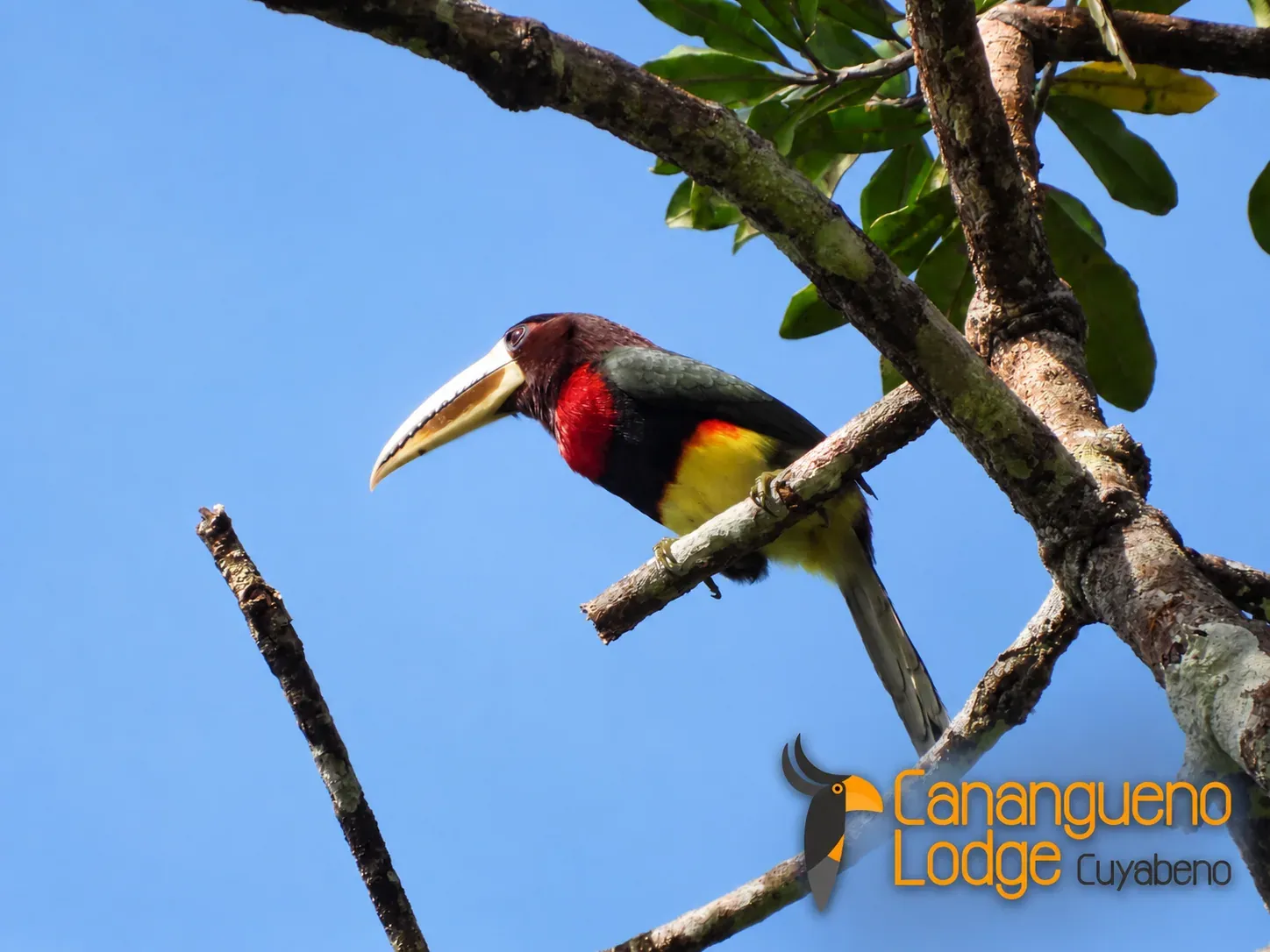
  • An aracari, a small toucan, perched on a branch

    Toucan

    You hear it before you see it, high in the trees along the bank.

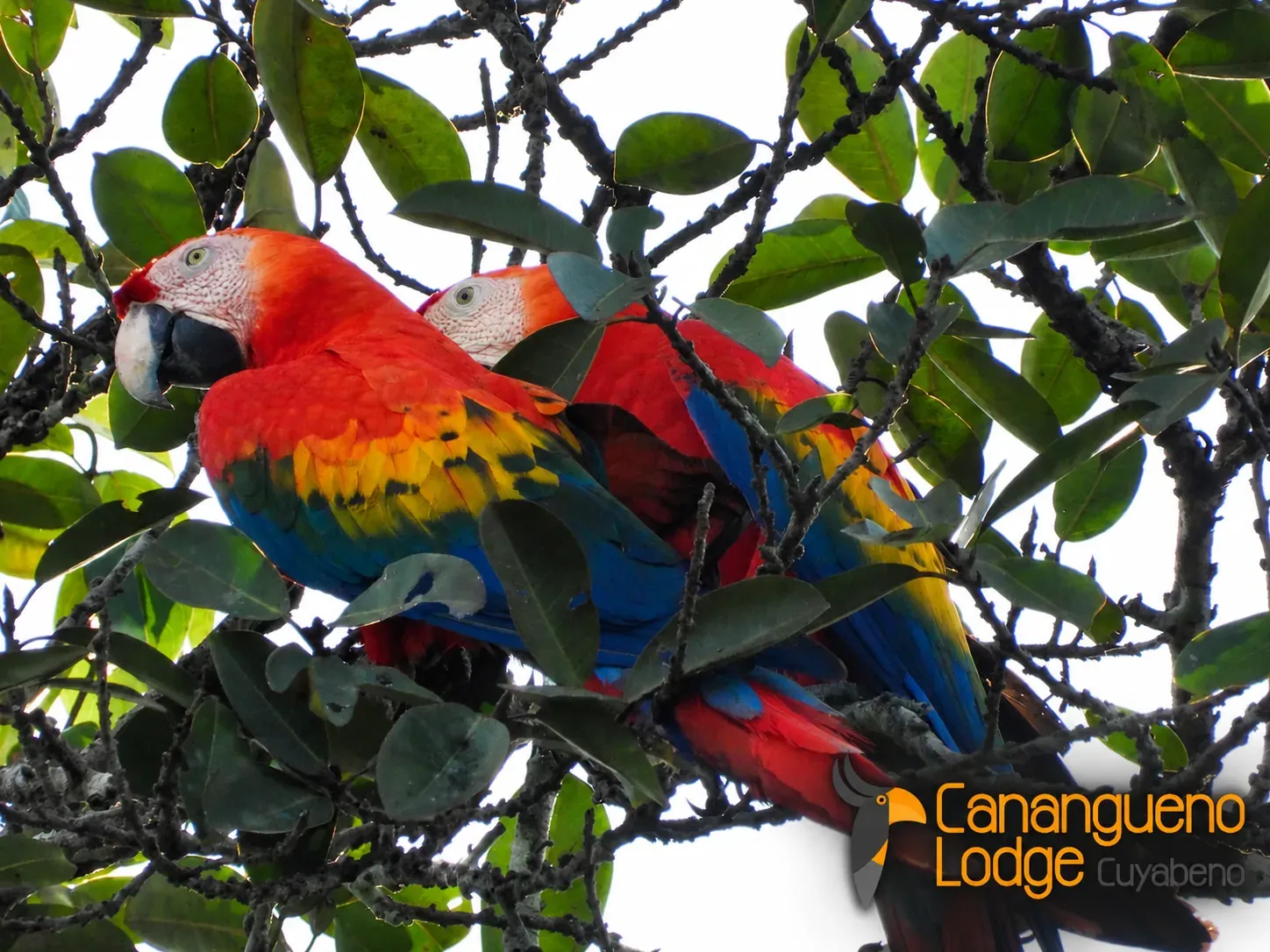
  • A pair of scarlet macaws among the leaves

    Macaws

    Always in pairs, crossing the river first thing in the morning.

  • Monkeys among the trees

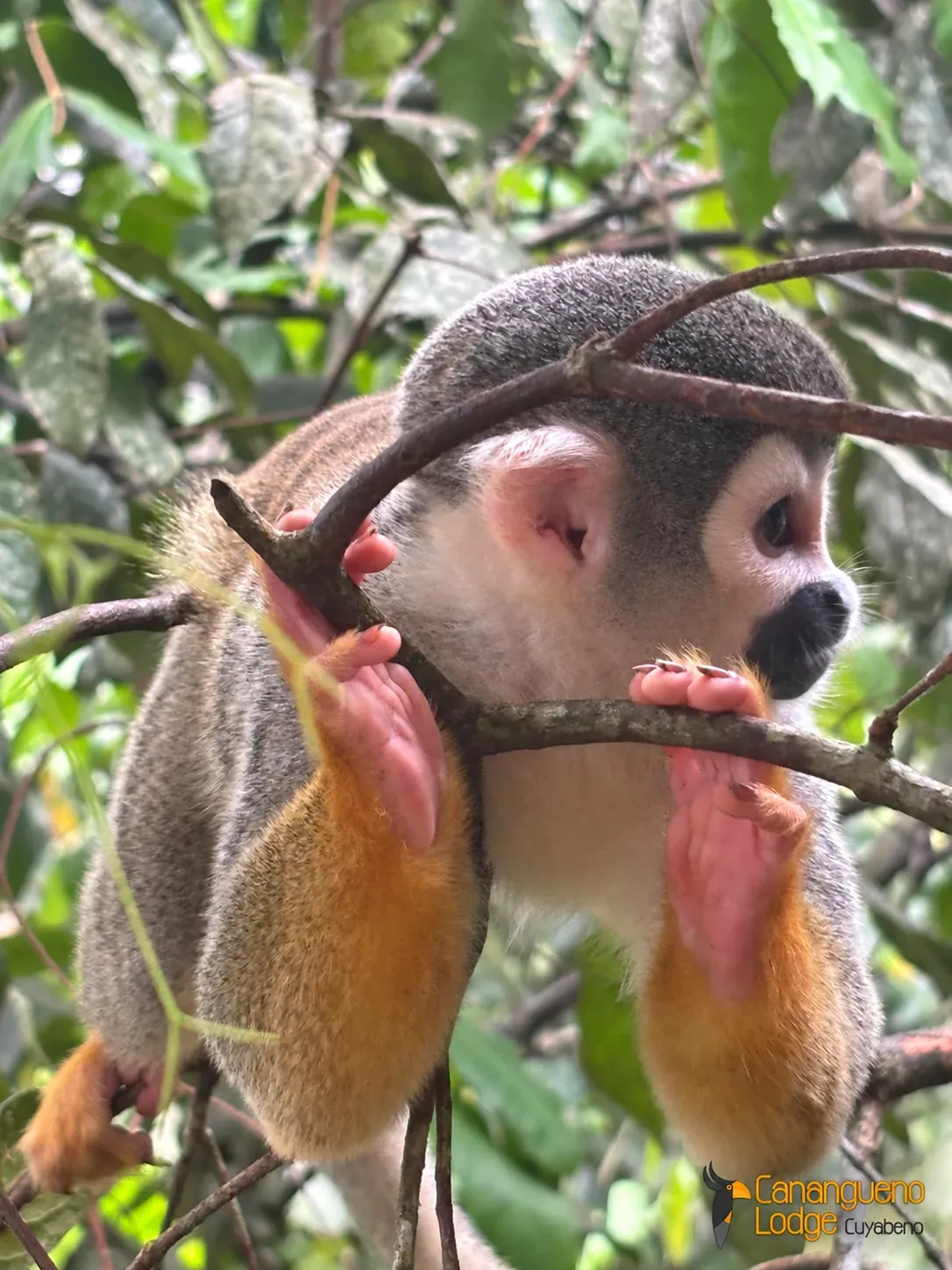
    Squirrel monkey

    They move in large, noisy troops, leaping from branch to branch.

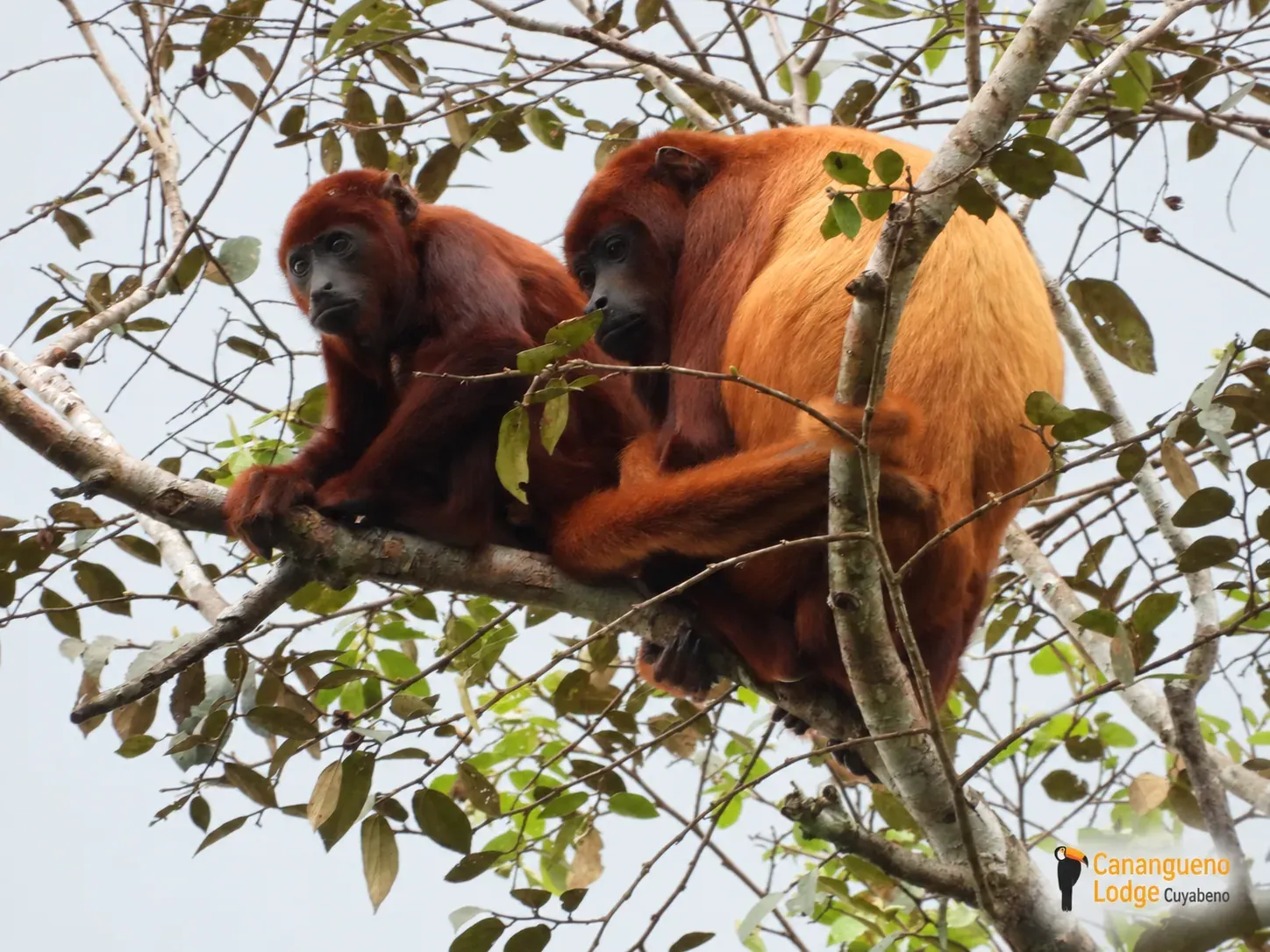
  • Two red howler monkeys in the treetops

    Howler monkey

    Its roar at dawn carries for kilometres.

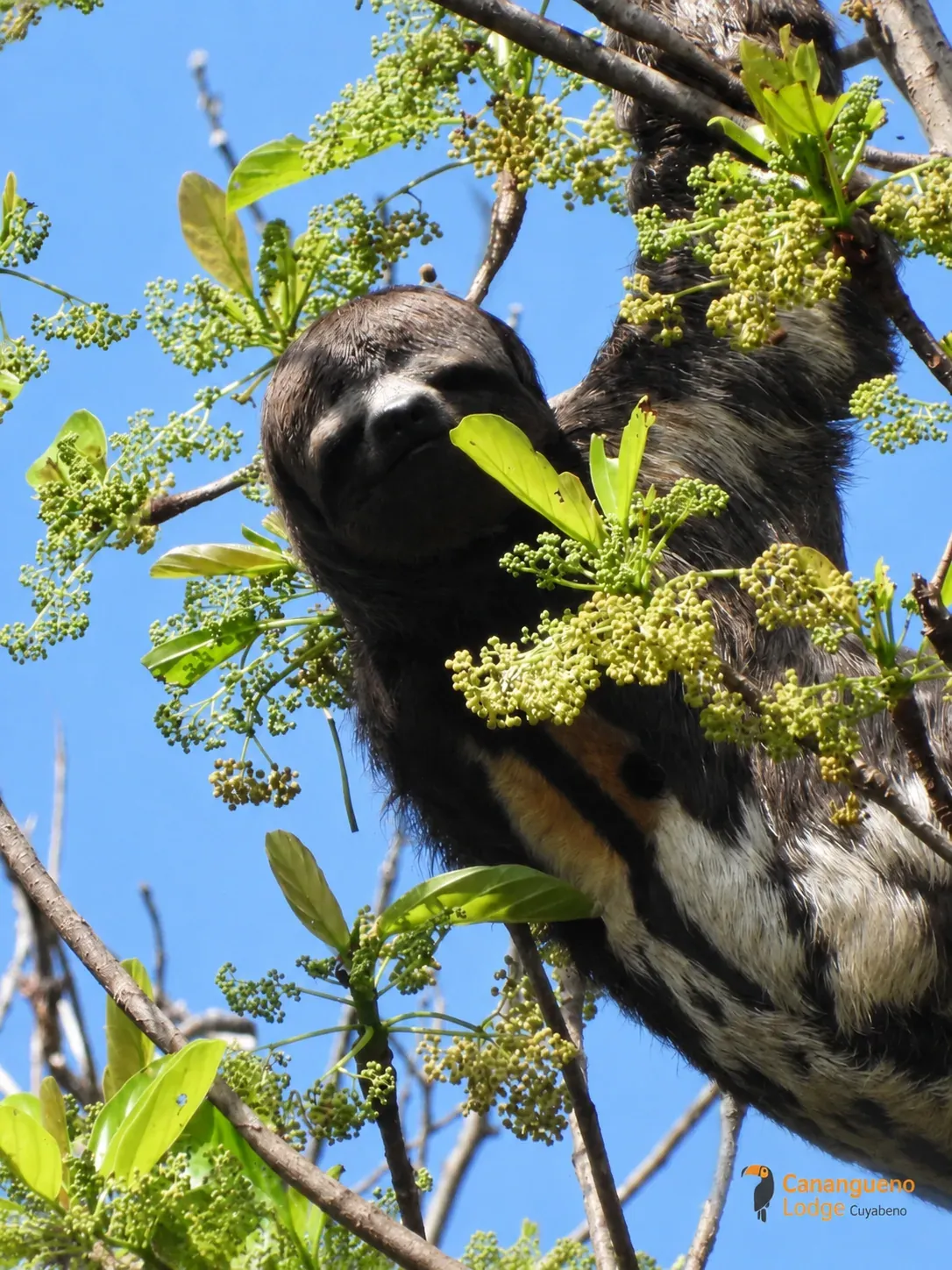
  • A sloth climbing through the high branches

    Sloth

    Motionless in a treetop; it takes a guide’s eye to spot one.

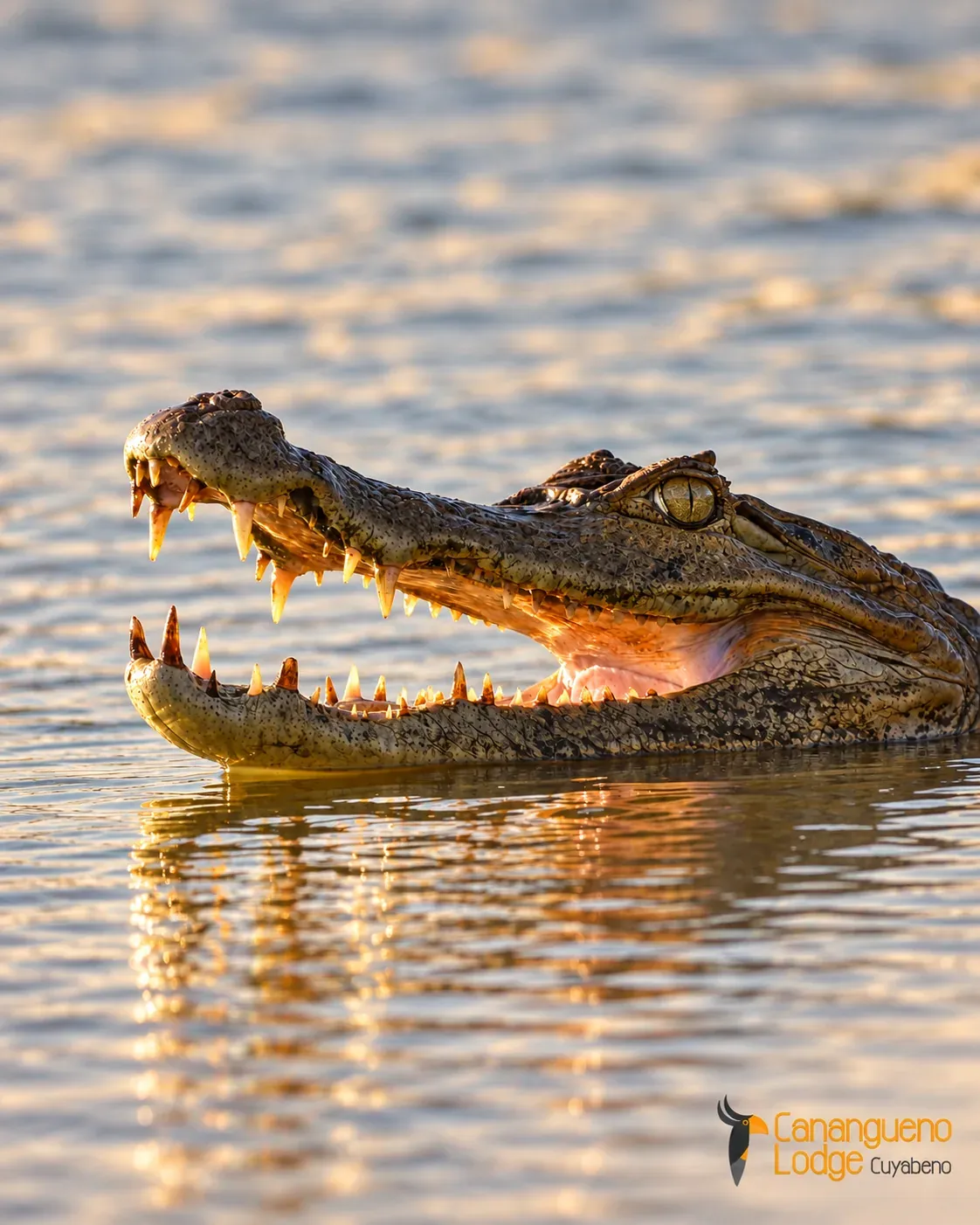
  • Caiman on the riverbank

    Caiman

    At night, along the edge of Laguna Grande.

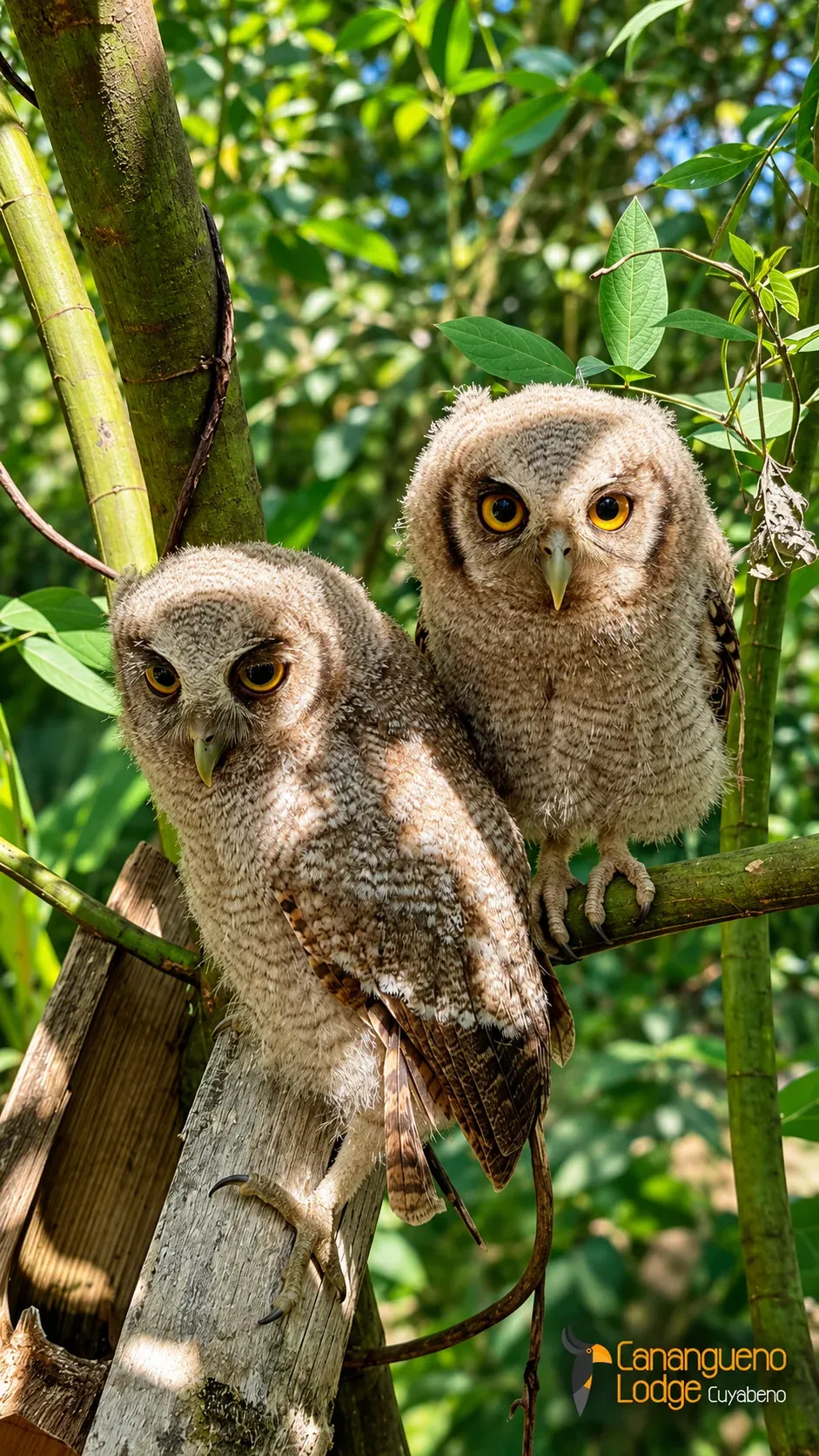
  • A pair of owls perched on a forest branch

    Owls

    Part of the night walk, when the forest changes shift.

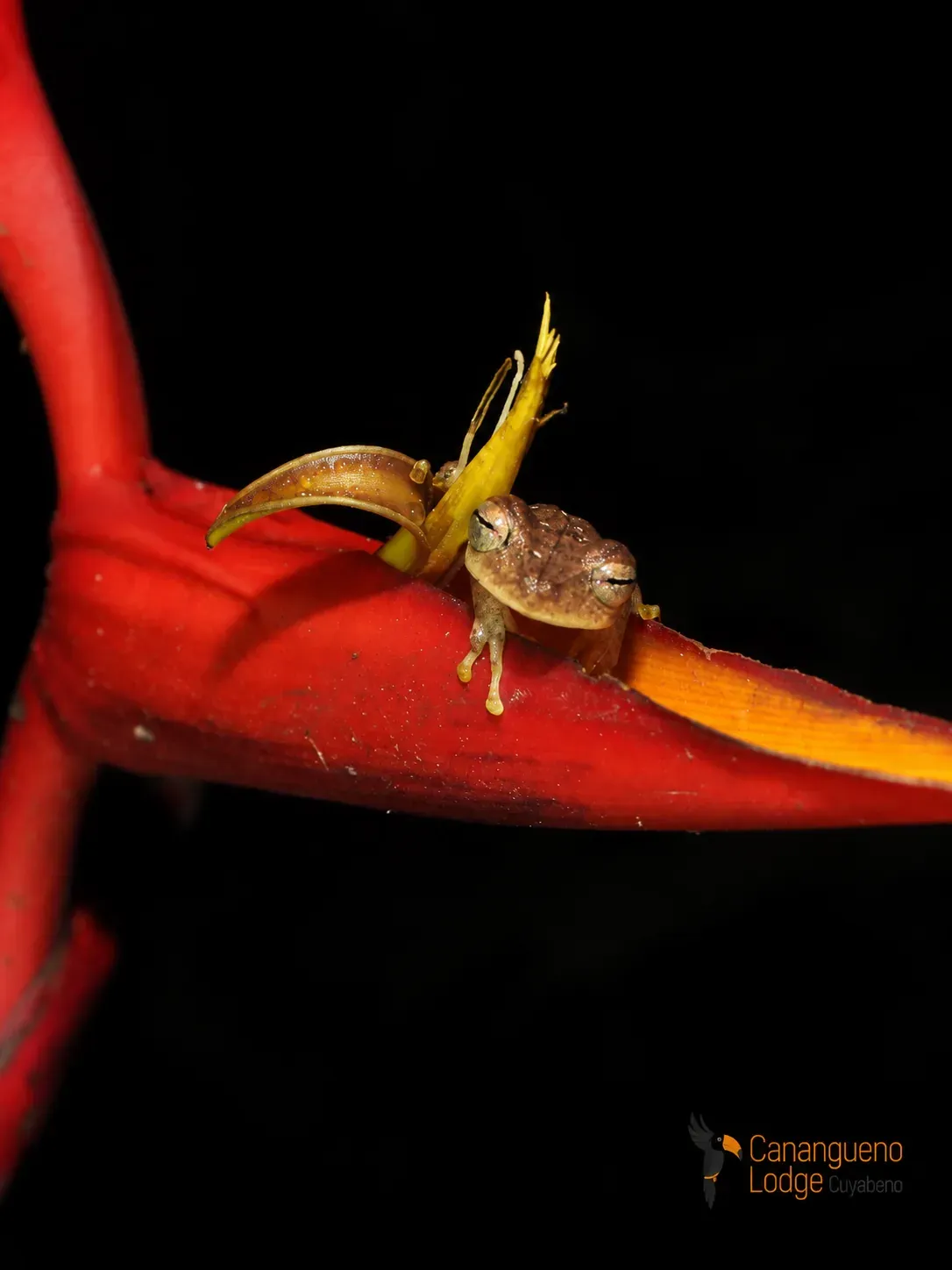
  • A frog on a heliconia flower during the night walk

    Frogs

    Hidden in heliconias and leaves: night is their time.

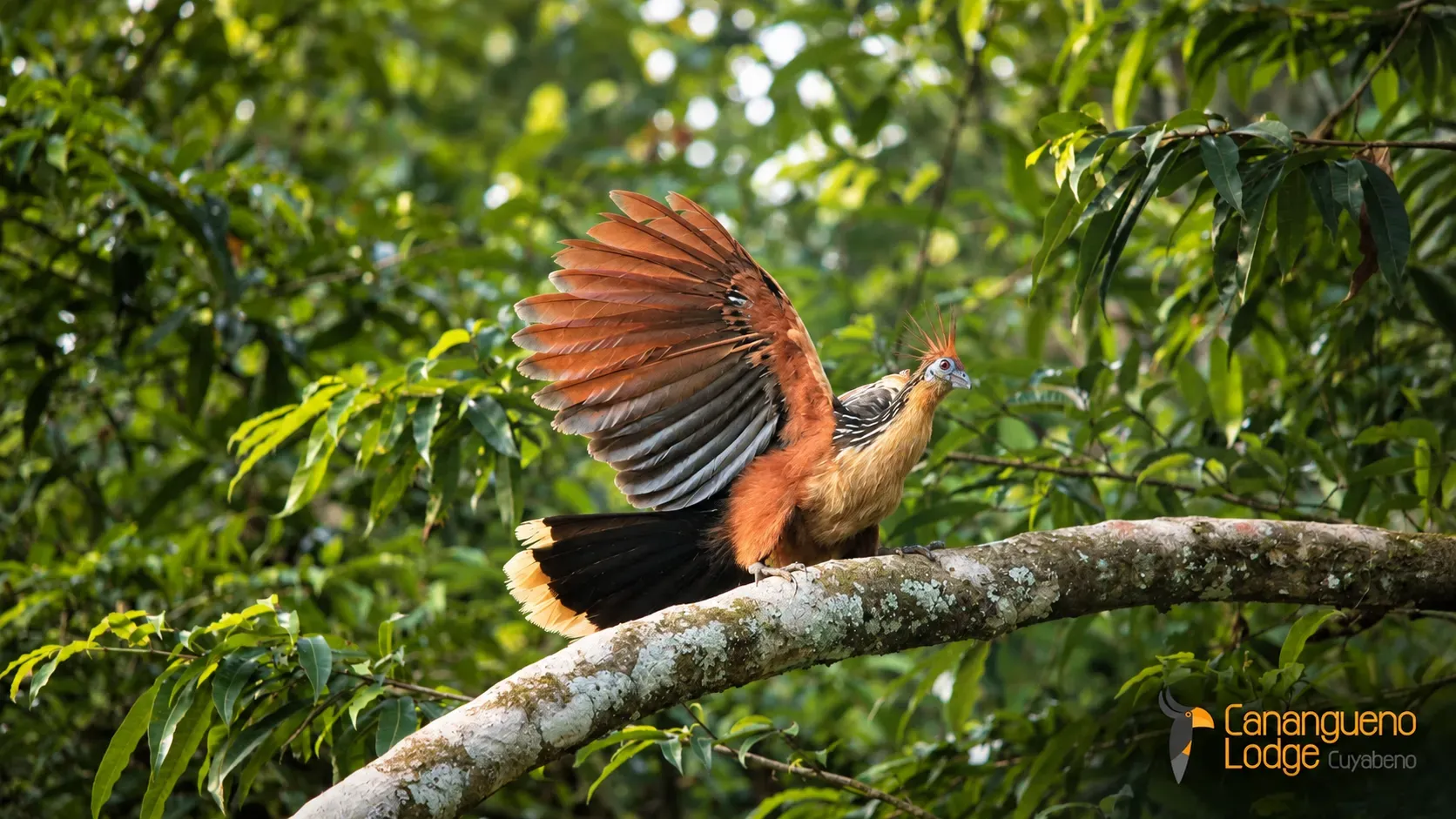
  • Hoatzin

    Hoatzin

    It nests in branches over the water, in noisy groups.

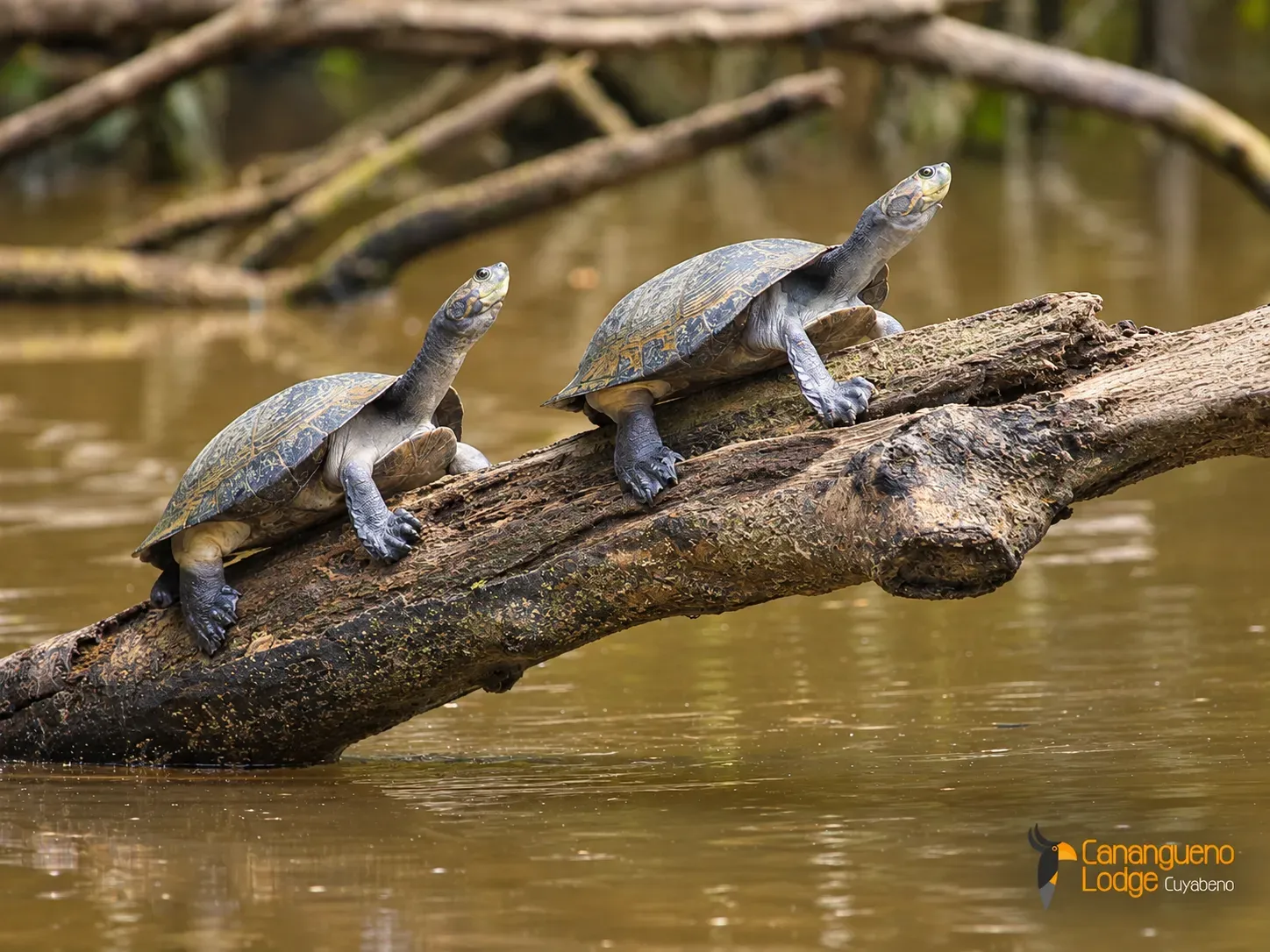
  • River turtles on a log

    River turtles

    They sunbathe on fallen logs along the bank.

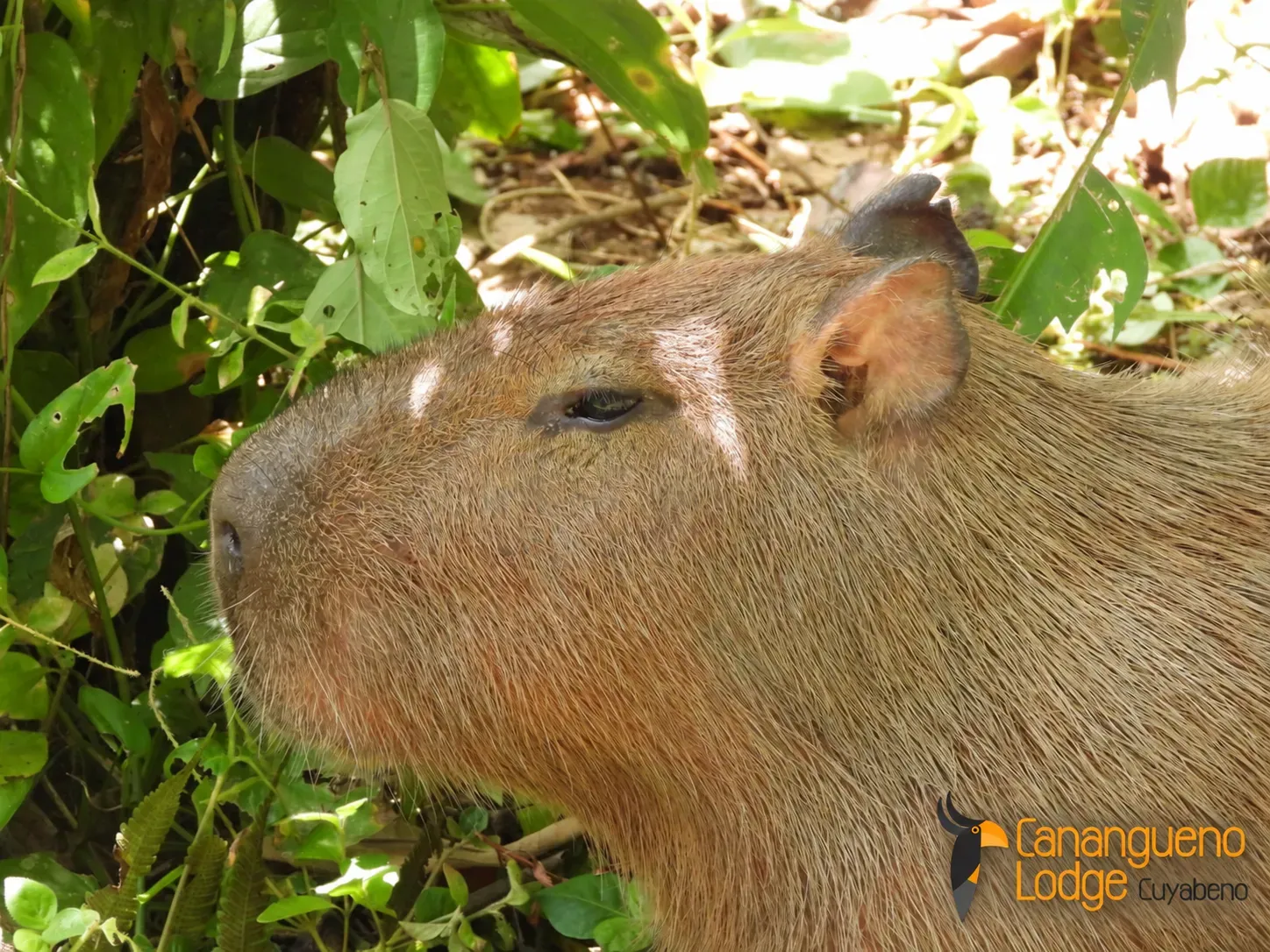
  • Capybara

    Capybara

    The world’s largest rodent, never far from the water.

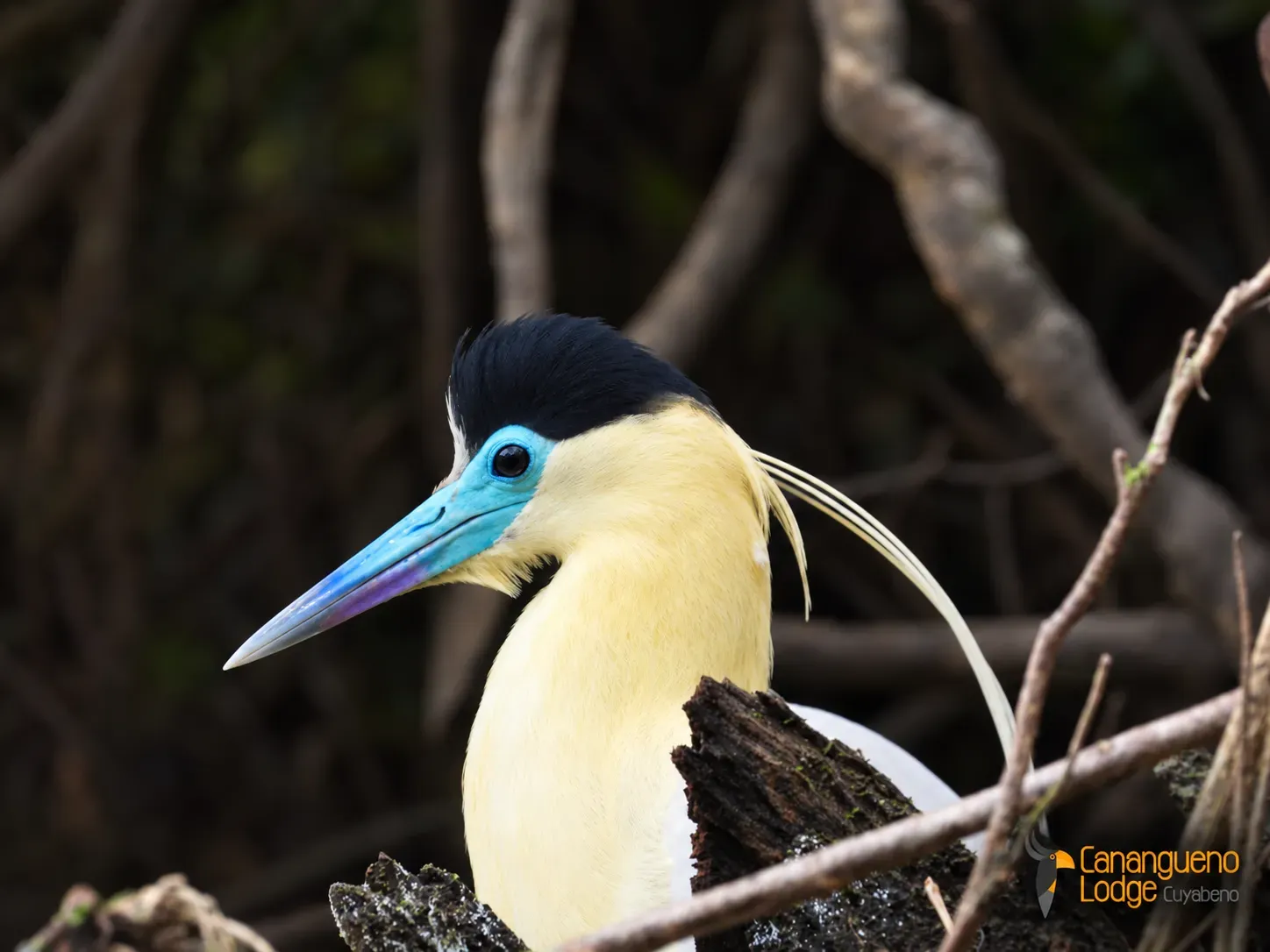
  • Heron

    Heron

    Still on the bank, waiting for the moment to fish.

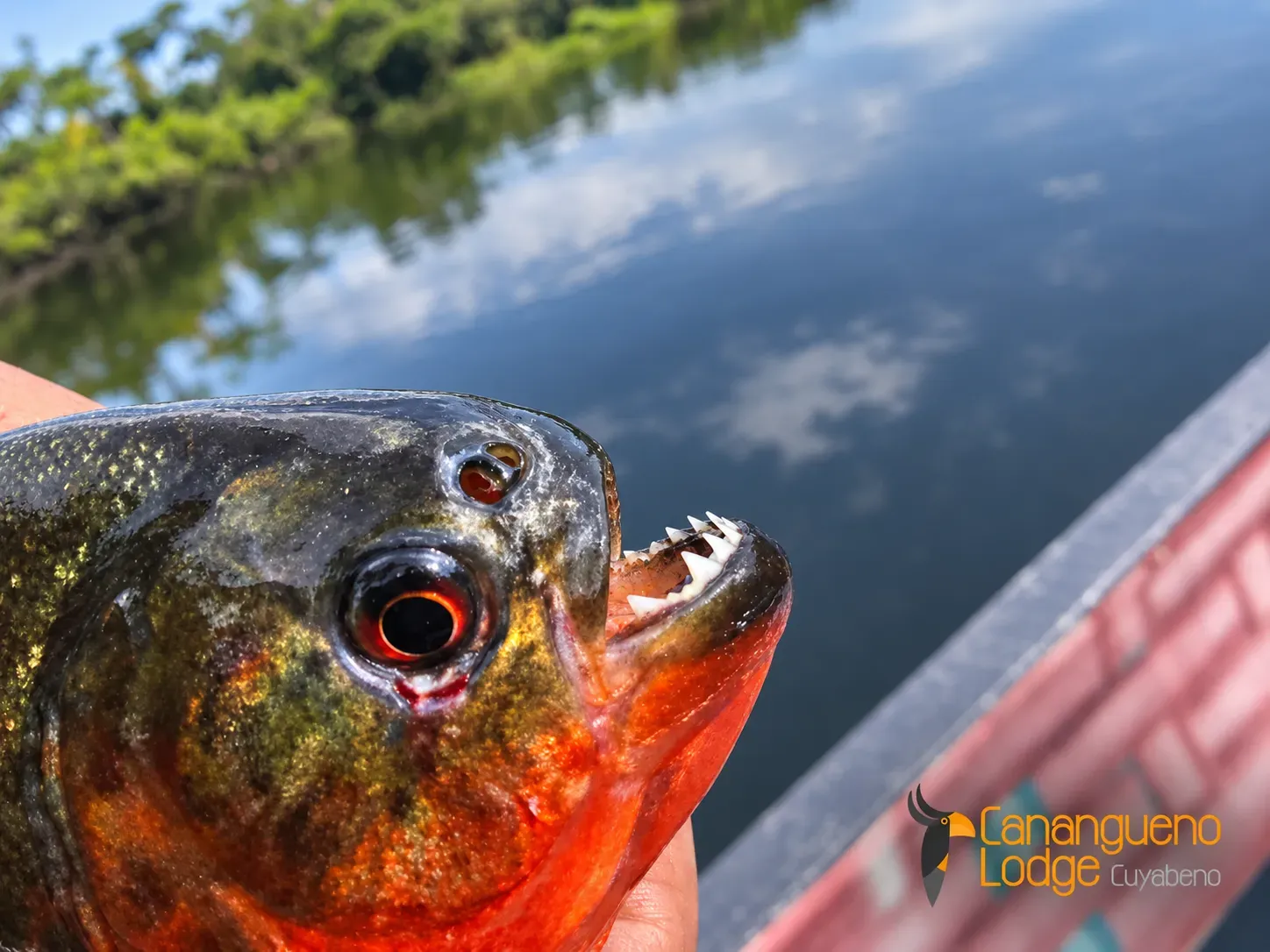
  • Piranha

    Piranha

    It lives in the rivers and lagoons; up close, its teeth are impressive.

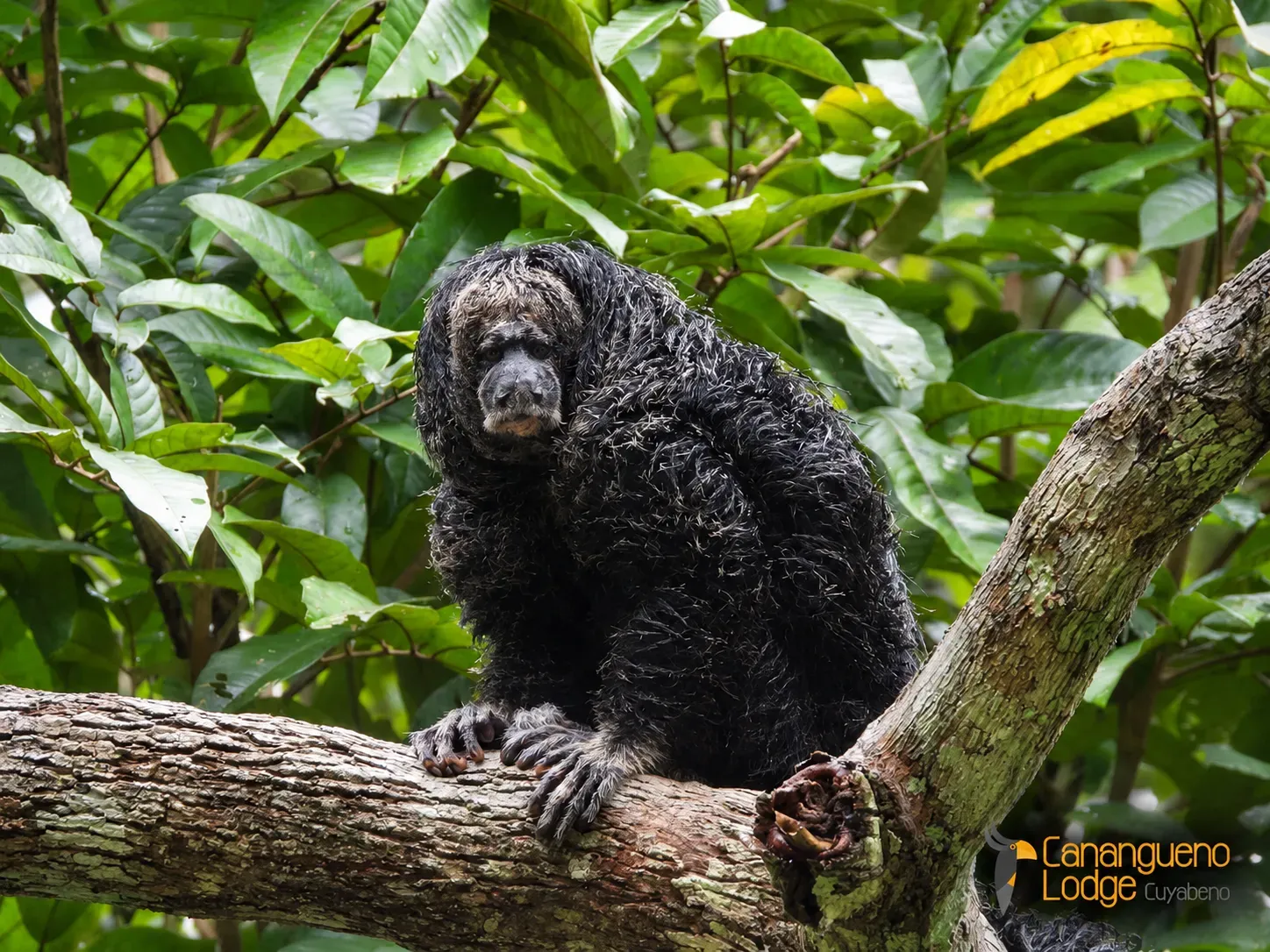
  • Saki monkey

    Saki monkey

    Shy and long-haired, it moves high up in the trees.

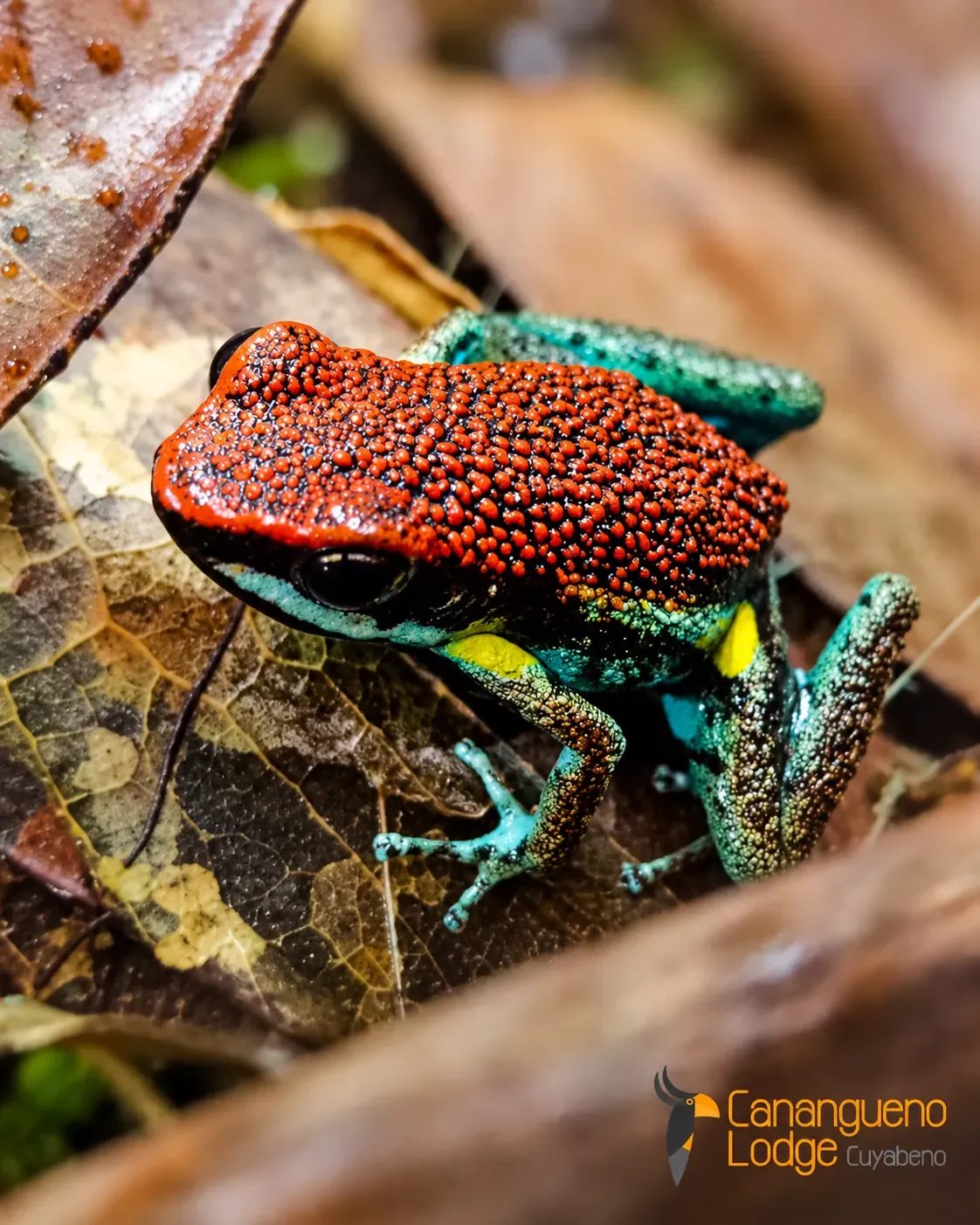
  • Poison dart frog

    Poison dart frog

    Small and brightly coloured: its way of warning that it’s toxic.

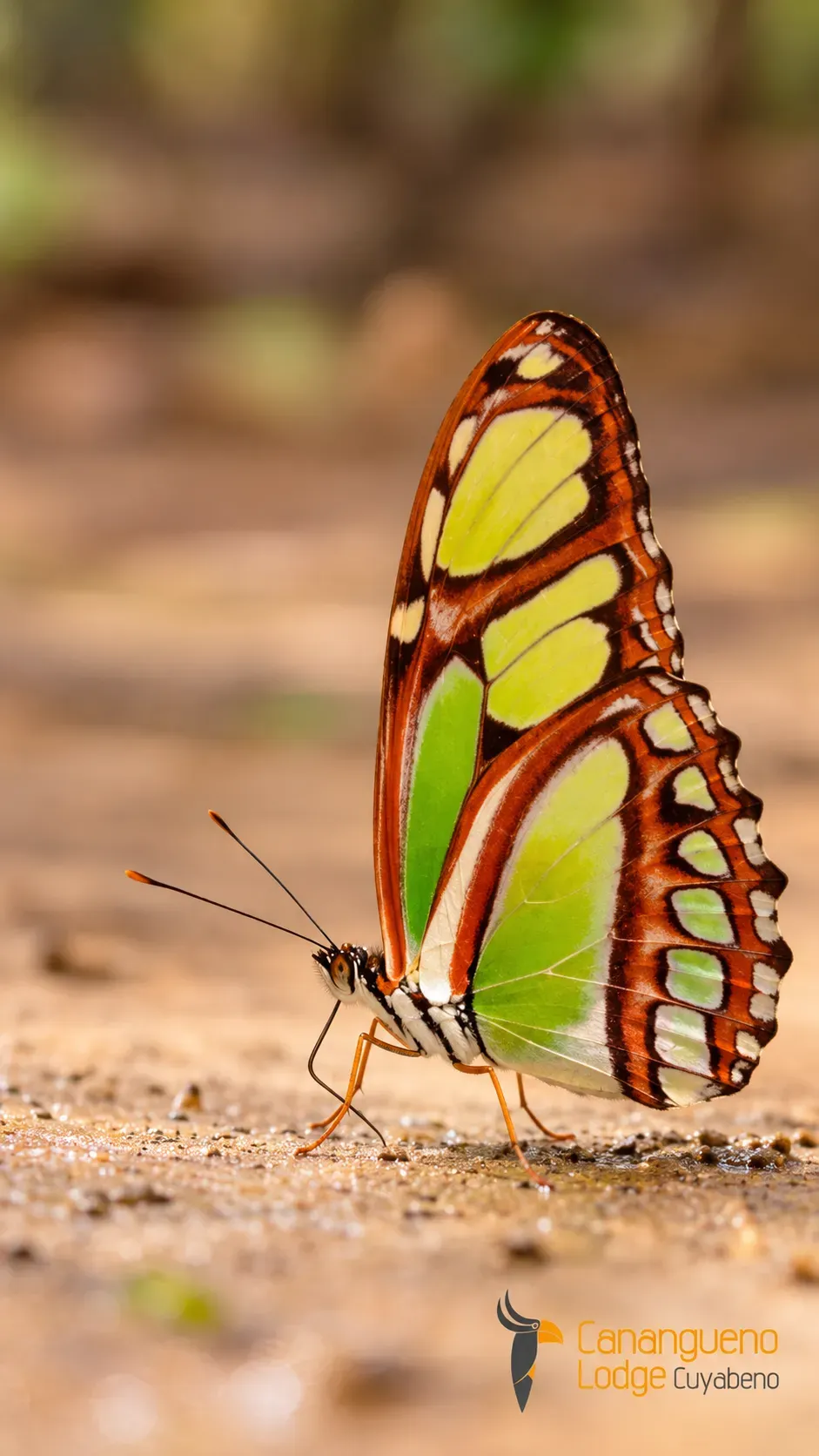
  • Butterfly

    Butterflies

    They appear in clearings and on the sand along the river.

And also: Pink river dolphin · Anaconda · Kingfisher · Parrots · Tree snakes

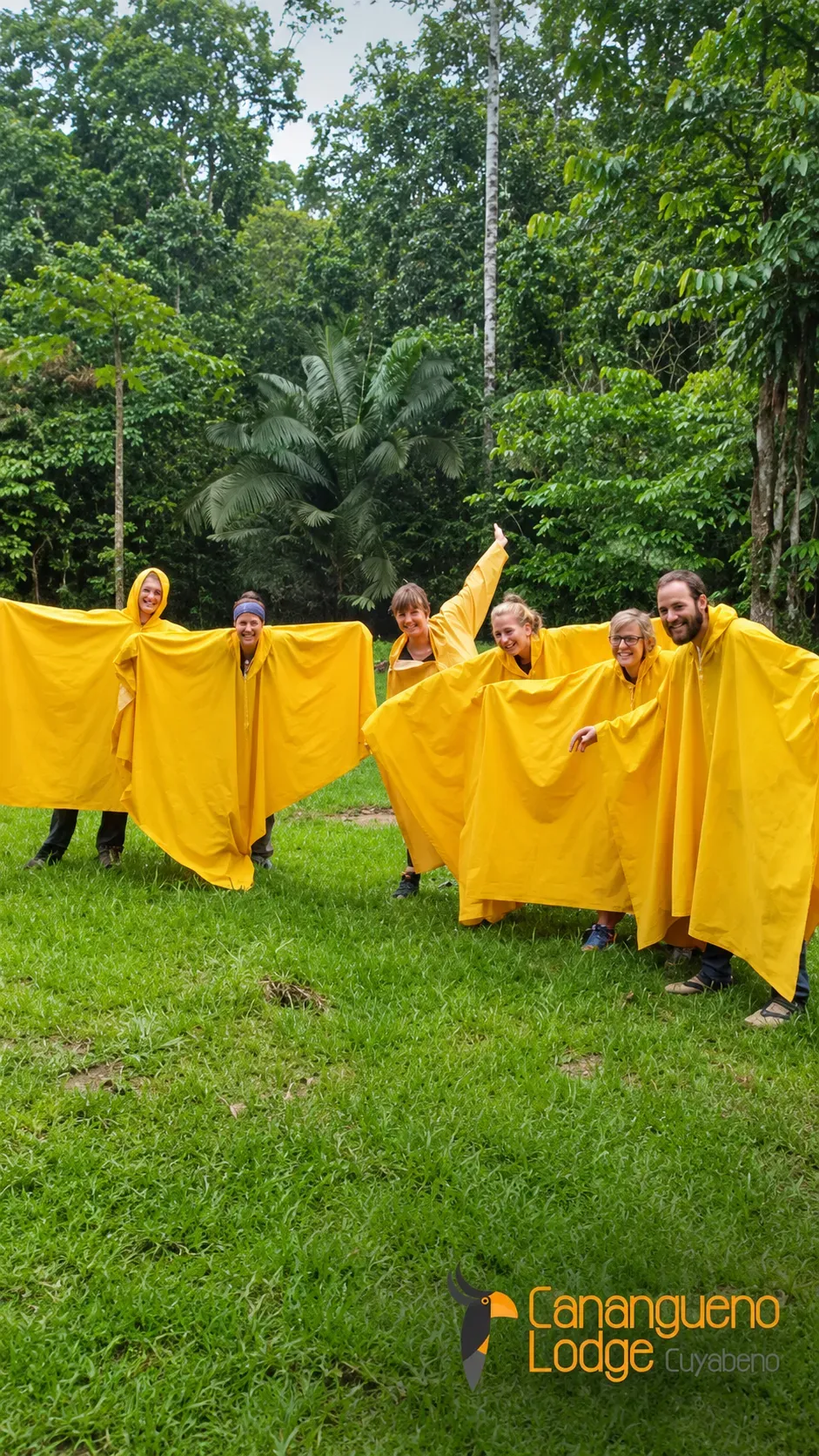
Travellers in yellow rain ponchos in Cuyabeno

When to go

Cuyabeno can be visited all year round. It’s rainforest: rain is part of the trip, and the lodge provides boots and a poncho. What changes through the year is the water.

  1. December – March

    Dry season

    Less rain and lower water. Laguna Grande can be lower than usual.

  2. April – July

    Rainy season

    The rivers rise and the forest floods: the canoe reaches further, in among the trees.

  3. August – November

    Moderate rain

    A middle ground: enough water to navigate and steadier days.

25 °C
average temperature
85–95%
humidity
3,000–4,000 mm
of rain a year

Experience Cuyabeno with us

Three routes from the lodge, of 3, 4 and 5 days. All of them enter by river, all of them visit Laguna Grande, and all go with bilingual guides.

See all the tours
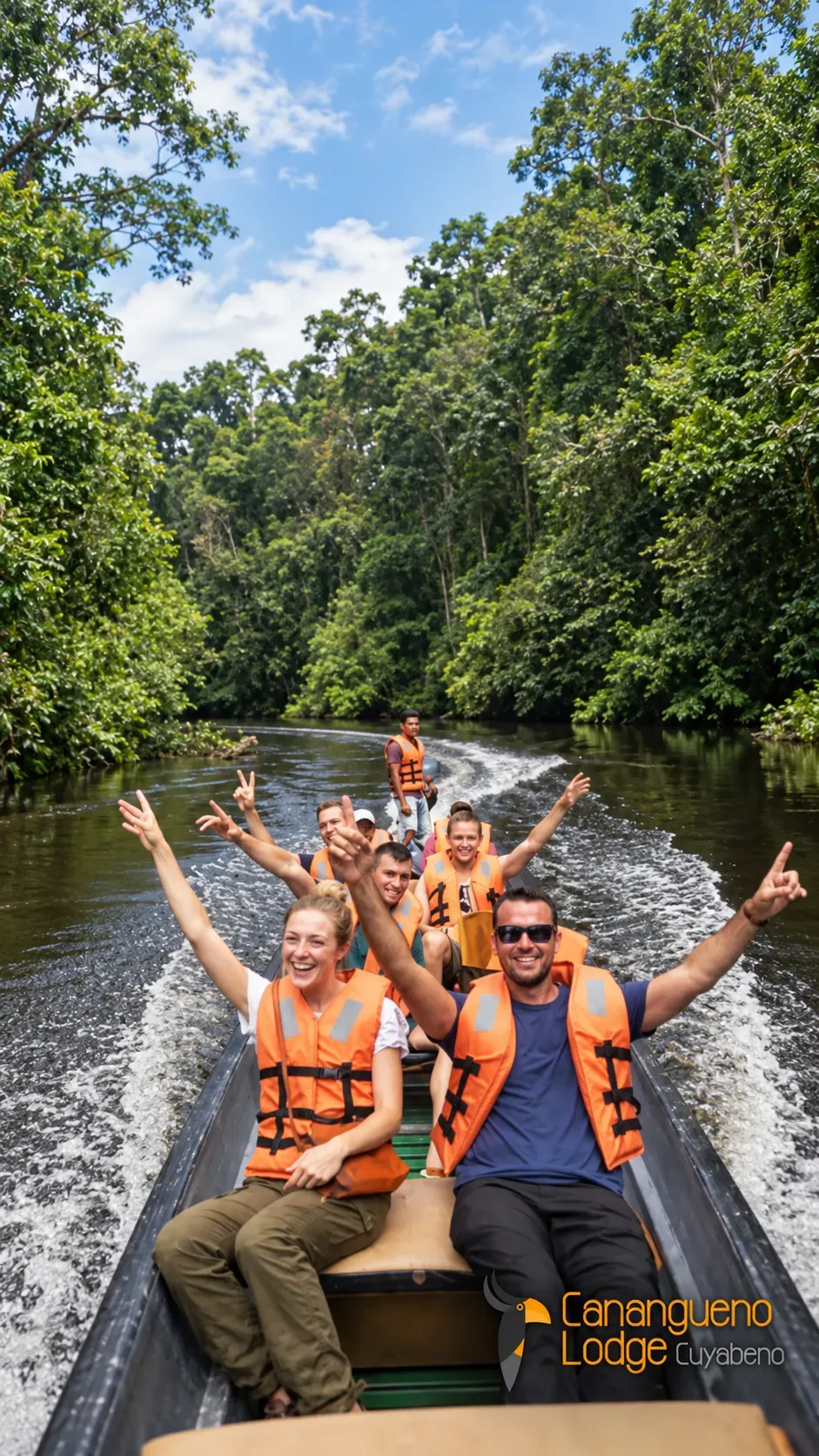
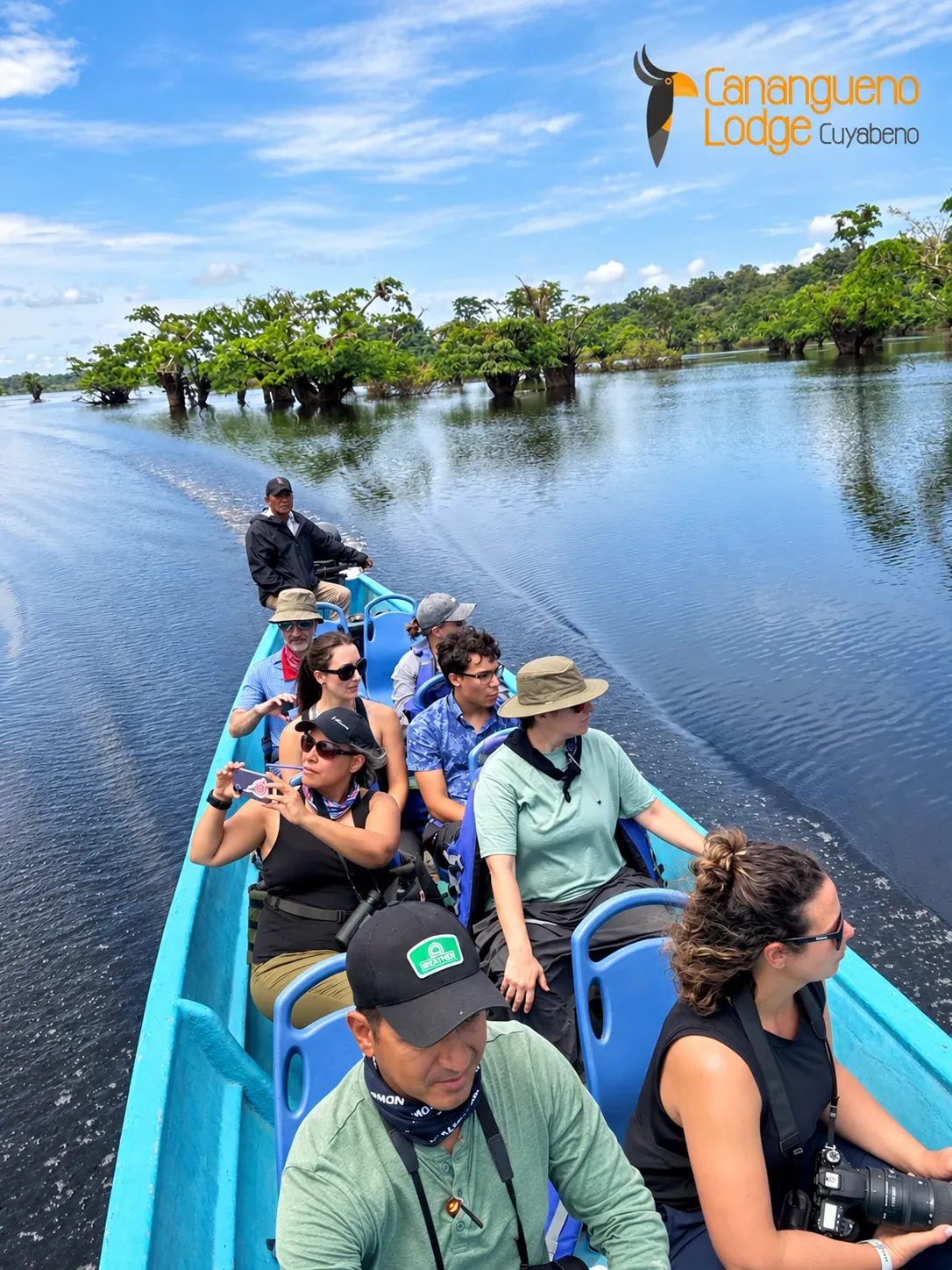
Travellers cheering in the canoe on the Cuyabeno river3 days / 2 nights

Three days in Cuyabeno

The shortest route without giving up what matters: Laguna Grande, caimans after dark and a full day with the Siona and Seoqueya communities.

  • Laguna Grande and a swim at sunset
  • Caimans and a night walk
  • Siona Taraveya and Seoqueya communities
Canoe with travellers on a lagoon among flooded trees4 days / 3 nights

Four days in Cuyabeno

The route we recommend most. Everything in the three-day programme plus a full day devoted to the primary forest: the largest trees in the Amazon, a swim in the river and a second night walk.

  • Sunset over Laguna Grande
  • A full day with the Siona and Seoqueya communities
  • A two-hour hike through primary forest
Sunset among the macrolobium trees of Laguna Grande5 days / 4 nights

Five days in Cuyabeno

The most complete programme. It adds the Shaman's House and a full day at Laguna Grande searching for anacondas among the macrolobium trees, with the guides explaining the lake ecosystems and the use of medicinal plants.

  • The Shaman's House in the Siona community
  • A full day at Laguna Grande
  • Searching for anacondas among the macrolobium trees

Tell us when you’d like to come.

Send us your dates and how many of you are travelling. The lodge team will reply with availability, room type and the rate for your group.